September 26, 2025
The plug that wins 2025 and how every brand gets there.
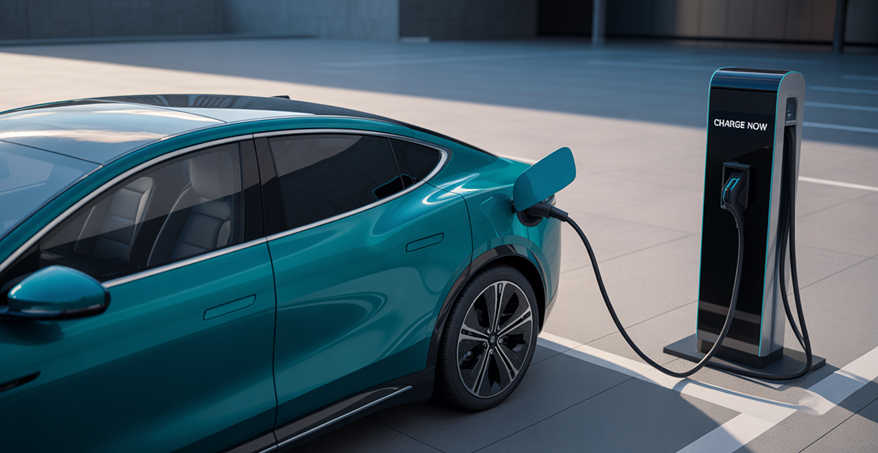
Electric-vehicle charging in the U.S. is converging fast on NACS, the North American Charging Standard, now formalized as SAE J3400. For drivers, that means simpler road trips, broader Tesla Supercharger access, and fewer dongles rattling in the glovebox. For brands, it means staggered rollouts, adapters, software updates, and in many cases new charge ports baked into 2025–2026 models.
Below, you’ll find a brand-by-brand timeline for 2025, the practical implications for charging this year, and model-specific price ranges wherever we mention a car, so you can plan purchases and road trips with confidence.
What is NACS in 2025, in plain English
-
NACS = the plug (now SAE J3400) most U.S. automakers are switching to.
-
Why it matters: direct access to the dense, relatively reliable Tesla Supercharger network, including new V4 Superchargers with longer cables and higher potential current.
-
Adapters both ways: CCS1 cars need a CCS→NACS adapter to use Superchargers; new NACS-port cars will use a NACS→CCS adapter to charge on legacy CCS networks (Electrify America, EVgo, ChargePoint).
-
Software & payment: most brands are enabling “Plug & Charge” or app-linked payment at Superchargers, so you plug in, the car handshakes, and billing happens automatically.
2025 charging realities you’ll actually feel
-
Coverage & uptime: Superchargers remain the most widespread U.S. DC fast-charging option. More non-Tesla brands are lighting up access each month.
-
Speed caveat: Some adapters limit peak current (or voltage on 800V cars), so top speeds can vary until V4 sites are ubiquitous and OEM-issued adapters catch up.
-
New competition: The IONNA network (BMW, GM, Honda, Hyundai, Kia, Mercedes-Benz, Stellantis, Toyota) is opening sites nationwide and contracting thousands of “Rechargery” bays, improving non-Tesla options quickly.
-
Standardization: SAE J3400/J3400-2 codifies the connector and communications, giving charger makers and automakers a common playbook moving forward.
Brand-by-brand: who gets NACS and Supercharger access in 2025
Tip for shoppers: in each listing, we call out representative models with current U.S. price ranges (MSRP before destination unless noted). That’s useful for comparing total cost of ownership alongside charging access.
Ford
-
Access: Live via OEM CCS→NACS adapters; broader integration continues through 2025.
-
Native NACS ports: Scheduled on new EVs beginning in the 2025–2026 window; check build specs at order time.
-
Models mentioned: Mustang Mach-E ($37,995–mid-$50Ks) and F-150 Lightning ($56,975–$87,190).
-
Keywords: Ford NACS, Ford Supercharger adapter, BlueOval Charge Network.
General Motors (Chevrolet, GMC, Cadillac)
-
Access: OEM adapters available; new vehicles begin integrating NACS across 2025–2026.
-
Native NACS first mover: Cadillac Optiq V late-2025 (per media reports), with broader GM integration starting 2026.
-
Models mentioned: Chevrolet Equinox EV ($33,600–$43,400) and Blazer EV ($44,600–$58,090); Cadillac Lyriq ($60,090–$68,990).
-
Keywords: GM NACS, Chevy Supercharger access, Ultium, J3400.
Hyundai Motor Group (Hyundai, Kia, Genesis)
-
Access: Hyundai began distributing free adapters in early 2025; Kia’s access kicked off in March 2025.
-
Native NACS: 2025 Hyundai Ioniq 5 and 2025 Kia EV6 ship with NACS or updated hardware depending on trim/market timing.
-
Models mentioned: Hyundai Ioniq 5 ($42,600–$66,200 with Ioniq 5 N) and Kia EV6 ($42,900–$63,800); Kia EV9 ($54,900–$73,900).
-
Keywords: Hyundai NACS, Kia NACS, 800V fast charging, V2L.
BMW Group (BMW, Mini, Rolls-Royce)
-
Access: BMW Group confirmed Supercharger access with NACS transition beginning 2025; timelines vary by model/software region.
-
Models mentioned: BMW i4 ($57,900–$70,700 typical MSRP band; broader market coverage $59,075–$71,875).
-
Keywords: BMW NACS, Plug & Charge, i4 Supercharger.
Mercedes-Benz
-
Access: Enabled February 2025 via approved NACS adapters through dealerships.
-
Native NACS: U.S. models begin integrating through 2025–2026; check MY updates.
-
Models mentioned: EQE Sedan (recent pricing guides place most trims mid-$60Ks to mid-$90Ks before options).
-
Keywords: Mercedes NACS, EQE charging, Supercharger access.
Volkswagen Group (Volkswagen, Audi, Porsche, Scout)
-
Access: Porsche and Audi began access in September 2025 via OEM adapters. Volkswagen has stated 2025 Supercharger access with adapter rollout (mid-year).
-
Native NACS: Group committing to NACS on future vehicles from 2025; detailed timing by nameplate varies.
-
Models mentioned: Volkswagen ID.4 ($41,420–$58,720); Porsche Taycan (from ~$101,395 and up, depending on body style).
-
Keywords: VW NACS, Audi NACS adapter, Porsche Supercharger, Scout EV.
Nissan
-
Access: Ariya gains Supercharger access via OEM adapter in 2025 rollout markets.
-
Models mentioned: Nissan Ariya ($39,770–$54,370 across trims).
-
Keywords: Nissan NACS, Ariya charging, CCS to NACS adapter.
Rivian
-
Access: Live since 2024 via OEM adapters; native NACS ports phase in on refreshed/new models from late 2025.
-
Models mentioned: Rivian R1T ($71,700–$101,700 depending on motors/battery).
-
Keywords: Rivian NACS, Adventure Network, R1T Supercharger.
Honda & Acura
-
Access: Honda Prologue and Acura ZDX owners receive adapters and app support in 2025.
-
Models mentioned: Honda Prologue ($47,400–$57,900 across EX/Touring/Elite).
-
Keywords: Honda NACS, Acura ZDX charging, GM Ultium.
Volvo & Polestar
-
Access: Volvo and Polestar enabled Supercharger access in 2025 via adapters; new models adopt NACS/J3400.
-
Models mentioned: Volvo EX30 (typical U.S. MSRPs mid-$40Ks to upper-$40Ks); Polestar 2 (most 2025 configs around the mid-$60Ks).
-
Keywords: Volvo NACS, Polestar Supercharger, J3400. (Use local dealer pricing for current trims.)
Lucid
-
Access: Lucid Air and Gravity can charge at Superchargers via OEM adapters; note reduced peak speeds on some site/vehicle combinations until more V4 coverage lands.
-
Models mentioned: Lucid Air (broad $70Ks–$110Ks+ depending on trim and options).
-
Keywords: Lucid NACS adapter, 924V charging, V4 compatibility.
Stellantis (Chrysler, Dodge, Jeep, Ram, etc.)
-
Access: Public commitment to NACS adoption and adapter support during 2025 transition; model-specific dates announced progressively.
-
Keywords: Stellantis NACS, Jeep EV charging. (Monitor brand sites for model-level timing.)
What this means for road-tripping in late 2025
-
Trip planning gets easier: As more brands flip the switch, routing apps in-car can add Tesla Superchargers alongside CCS stops. Expect better first-try success rates and denser site spacing on major interstates.
-
Cable reach improves: V4 Superchargers’ longer cables help cars with ports on front/fenders, avoiding awkward parking angles.
-
Adapter reality check: Expect some charge-rate limits on certain adapters and at older V3 sites; your results will improve as more V4 locations go live and OEM adapters roll out with higher current/voltage specs.
-
More choice beyond Tesla: IONNA is already open in multiple states with hundreds of bays live/contracted and plans for 1,000+ bays this year, expanding high-power DC options on key corridors.
-
Standardization reduces friction: With SAE J3400 finalized (and updates published in 2025), hardware makers and site operators have a unified target, less fragmentation, clearer labeling, smoother Plug & Charge.
Quick FAQ for shoppers and fleet managers
Is NACS the same as Tesla’s plug?
Yes—NACS is the open, standard-track version of Tesla’s connector, now published as SAE J3400.
Do I still need two adapters?
If your car has CCS1, you’ll want a CCS→NACS adapter for Superchargers and keep using CCS stalls as-is. If your car has a NACS port from the factory, carry a NACS→CCS adapter for legacy CCS sites.
Will charging be as fast as the brochure claims?
Often, yes, but speed depends on state of charge, battery temperature, site power, and adapter limits. Expect the best results on V4 Superchargers and newer 350-kW CCS sites.
How do I pay at Superchargers in a non-Tesla?
Most brands integrate billing in their owner apps (e.g., MyChevrolet, MyHyundai). Some launches started with the Tesla app and then added in-brand billing and Plug & Charge after initial “soft launch” phases.
What about pricing and idle fees?
Superchargers typically bill per kWh (or per minute in some states), plus idle fees if you’re plugged-in after charging completes. Your brand’s app shows current rates before you start.
Editor’s brand snapshots with prices (2025 models referenced above)
-
Ford Mustang Mach-E: $37,995–mid-$50Ks | F-150 Lightning: $56,975–$87,190.
-
Chevrolet Equinox EV: $33,600–$43,400 | Blazer EV: $44,600–$58,090 | Cadillac Lyriq: $60,090–$68,990.
-
Hyundai Ioniq 5: $42,600–$66,200 | Kia EV6: $42,900–$63,800 | Kia EV9: $54,900–$73,900.
-
BMW i4: commonly $59,075–$71,875 across U.S. market guides.
-
Mercedes-Benz EQE Sedan: typically mid-$60Ks–mid-$90Ks depending on trim.
-
Volkswagen ID.4: $41,420–$58,720 | Porsche Taycan: from ~$101,395 to well above that with body styles/options.
-
Nissan Ariya: $39,770–$54,370.
-
Rivian R1T: $71,700–$101,700.
-
Honda Prologue: $47,400–$57,900.
Bottom line for 2025
The NACS dominoes have fallen. If you’re buying an EV in the U.S. this year, prioritize native NACS or solid OEM adapter support, verify app/billing integration, and keep an eye on V4 Supercharger coverage and IONNA site growth along your routes. The payoff is real: simpler charging, denser coverage, and trip plans that feel a lot less like a science project.