September 16, 2025
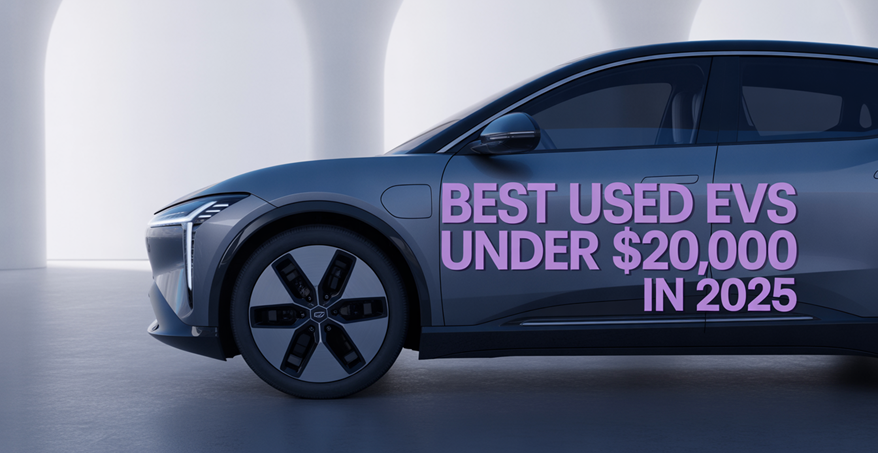
How to score a solid used electric vehicle without getting burned.
Electric vehicles are more accessible than ever on the used market, but making a smart purchase under $20,000 means understanding battery health, warranty coverage, typical degradation, and real-world range.
Below is a comprehensive guide to what to check, what to expect, and which models deliver the best value in the U.S. in 2025.
Key criteria to evaluate before buying
-
Battery warranty terms: how many years or miles remain, what percentage of battery capacity is guaranteed.
-
Degradation risk factors: age, number of charge cycles, thermal management (air-cooled vs. liquid-cooled packs), climate exposure, fast-charging history.
-
Expected real-world range: advertised EPA range vs. what a buyer will get considering degradation.
-
Cost of battery replacement or repairs: what it might cost if the battery pack fails or drops below warranty threshold.
-
Availability of certified pre-owned (CPO) programs and state/federal incentives for used EVs under certain price caps.
What battery warranties look like in 2025
-
Many EVs now offer 8 years / 100,000 miles powertrain / battery warranties. Some guarantee at least 70% capacity retention over that period.
-
Manufacturers like Hyundai and Kia tend to have stronger warranty coverage in this segment.
-
For certain older models (especially before ~2016), warranties may be expired or near expiry; battery degradation is more severe in early packs.
Risks of battery degradation
-
Batteries lose capacity over time: miles driven, charging behavior (frequent fast charging can stress the battery), charging to 100% regularly, and exposure to heat accelerate degradation.
-
Air-cooled pack designs (used in some older Leafs, early EVs) tend to degrade more in hot climates. Newer EVs usually have liquid cooling, thermal management, or better chemistry to slow the fade.
-
After a certain point, battery replacement is very expensive (often thousands of dollars). In some EVs, owners may find limited aftermarket solutions, but reliability and warranty transferability are concerns.
What range to expect in real conditions
-
An EV rated EPA 200+ miles new might deliver 80-90% of that with moderate degradation (say after several years).
-
Older EVs with smaller battery packs (e.g. <30-40 kWh usable) may have much more noticeable range loss, especially in cold or hot weather or with frequent fast charge.
-
Consider the usage pattern: daily commute, road trips, charging availability at home/work.
Top used EV models under $20,000 in 2025 that check the right boxes
Here are several models that tend to deliver good battery warranties, manageable degradation, and usable range, all within the sub-$20,000 budget (though condition, mileage, trim, and location will change prices):
| Model | Typical EPA Range (new) / What you might get used | Pros / Warnings | ||
|---|---|---|---|---|
| Chevrolet Bolt EV (2017-2022) | New ~238-259 mi (for recent models); used with good battery maybe ~180-220 mi depending on age & use. | Very good value. Need to check if vehicle had required battery firmware / recall updates. Older units may have battery reduced to ~80%. | ||
| Tesla Model 3 (2018-2021) | New EPA range ~220-310 mi depending on trim; used with moderate degradation maybe ~180-250 mi in good specimens. | Good performance & Supercharger network. Watch out for battery’s history, accidents, and whether battery health is documented. High mileage units may have more fade. Strong resale & charging infrastructure advantage. | ||
| Nissan Leaf (2018-2021) | Newer second‐gen Leafs ~150-226 mi (depending on battery size). Used perhaps significantly less if earlier pack and air cooling. | Great urban EV, lower cost of entry. Range and charging speed not as strong as newer competitors. If used heavily in hot climate, check battery condition. |
Smart checks before buying
-
Request battery health report: some dealerships / private sellers can show battery state of health (SoH) or “battery score.”
-
Check if any recall work has been done (especially for models like the Bolt EV which had safety recalls related to battery issues).
-
Check thermal management system: Does the pack have liquid cooling? Is the battery pack well maintained? Frequent charging to 100% or letting battery sit at very low or very high states hurts longevity.
-
Inspect charging history if possible: how often fast charging was used, whether car was stored or driven in extreme temperatures.
-
Compare the remaining warranty coverage: if battery is still under warranty, that gives peace of mind. Even some used cars receive limited residual warranty for battery / drive train.
-
Evaluate the cost of battery replacement: if warranty expires soon, what would a replacement pack cost? Factor that into total cost of ownership.
Is it worth it?
For many buyers, used EVs under $20,000 hit a sweet-spot: lower purchase cost, operating savings (electricity vs gas), lower maintenance (fewer moving parts). If battery warranty is still valid, or battery condition is strong, and driving patterns are modest, risk is manageable.
However, buyers must accept that range will be less than new; some models may need software updates or battery fixes; resale value for EVs with degraded batteries tends to drop more steeply.
Final guidance to maximize value
-
Focus on models with strong battery warranty and good thermal management (e.g. liquid cooling).
-
Target vehicles that had firmware/recall updates done.
-
Negotiate based on battery health metrics, mileage, condition.
-
Explore state and federal incentives (used EV tax credits are expanding) to reduce effective cost.
Used EVs under $20,000 in 2025 can offer excellent value with proper research. By understanding battery warranties, risk of degradation, and real-world range, buyers can lock in a deal that delivers both savings and peace of mind.