October 4, 2025
Pick the right budget-friendly platform and parts for a capable first overland rig.
Looking to build a budget overlanding rig in the U.S. without torching your savings?
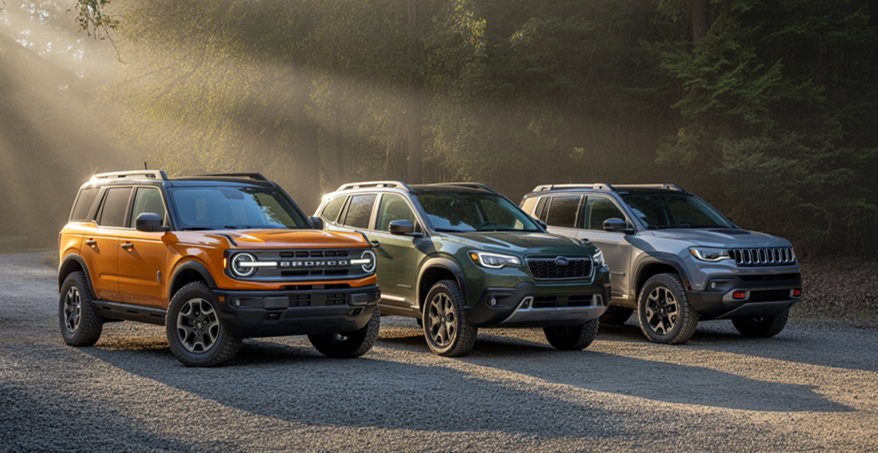
Three factory-tough crossovers stand out for starter builds under $5,000: the Ford Bronco Sport, Subaru Outback Wilderness, and Jeep Compass Trailhawk.
Below you’ll find real specs, current price ranges, parts you actually need (and what to skip), and three dialed-in $5K build recipes that preserve warranty-friendly reliability and on-road manners.
Quick specs & pricing snapshot (2025 U.S.)
-
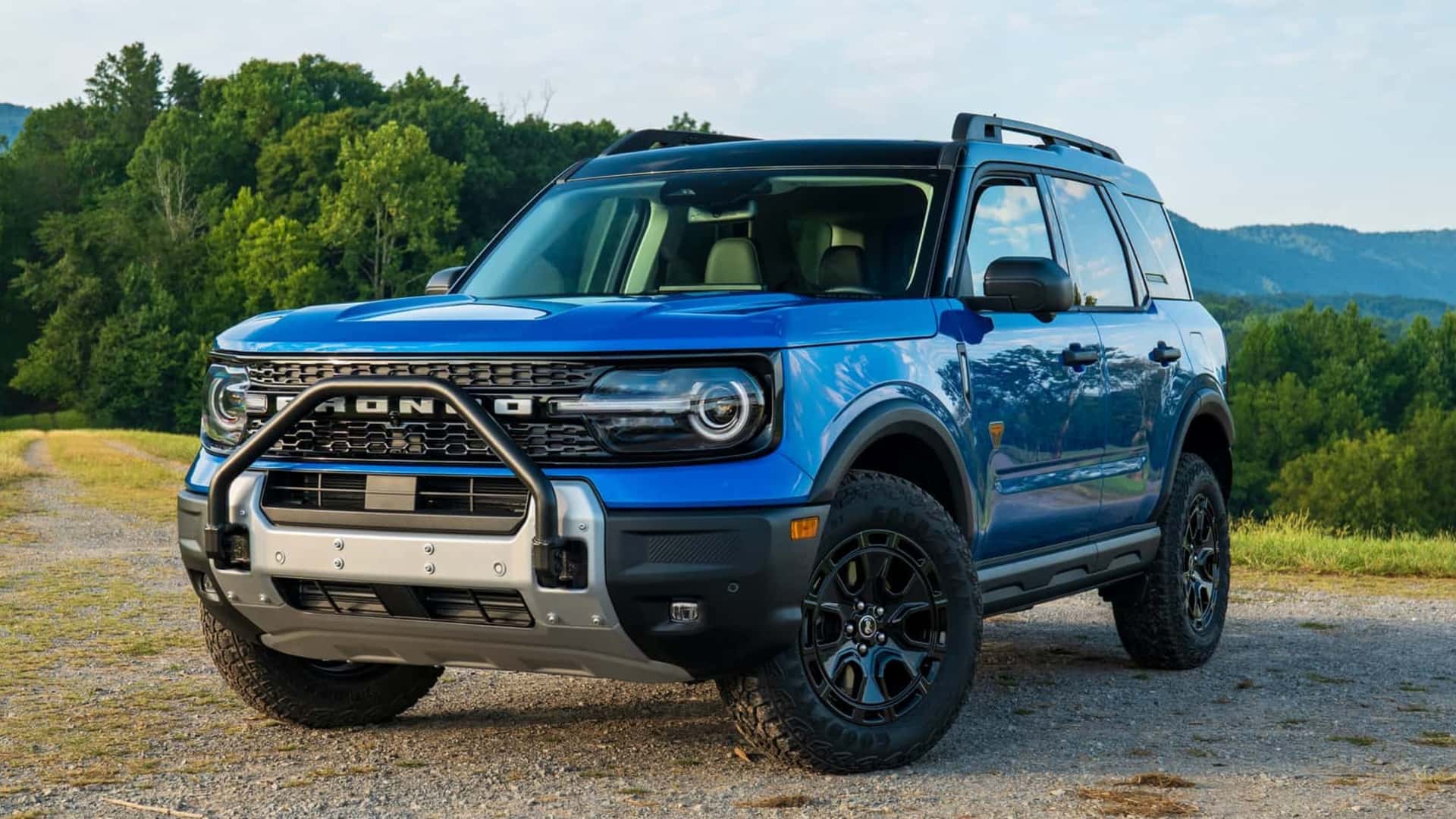
Ford Bronco Sport (Badlands/Sasquatch optional) — New MSRP: from $31,695; typical used listings range ~$20,000–$33,000 depending on year/trim/miles.
Towing: 2,200–2,700 lb (trim/package dependent). Payload: roughly ~825–1,160 lb across trims. Ground clearance: ~7.8–8.8 in stock; Sasquatch adds trail hardware.
-
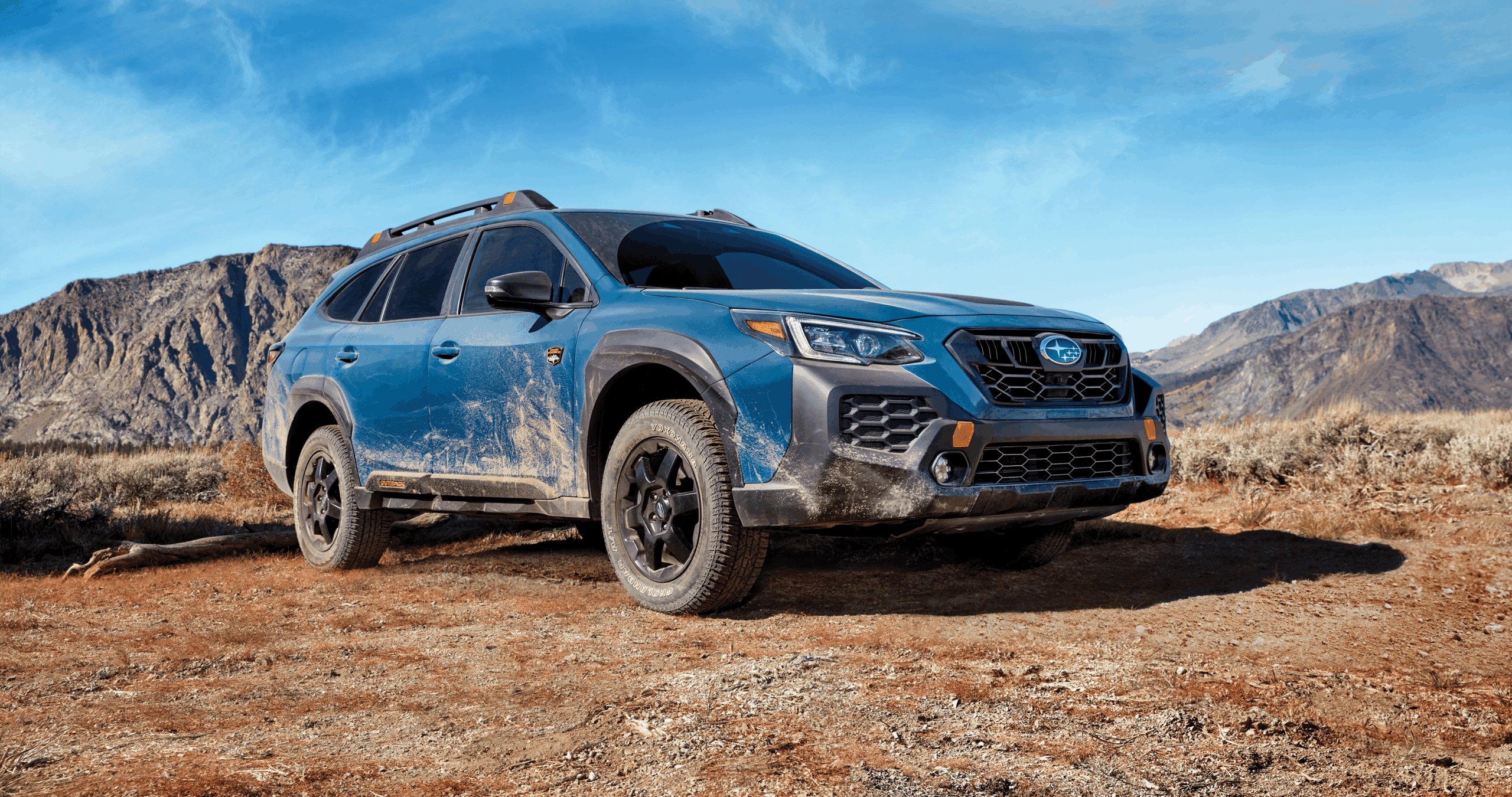
Subaru Outback Wilderness — New MSRP: $39,960–$41,710; used Wilderness listings commonly ~$32,000–$40,000 (’22–’24).
Towing: 3,500 lb; Ground clearance: 9.5 in; Angles (Wilderness): 20.0° approach / 23.6° departure / 21.2° breakover; Payload typically around ~900 lb.
-
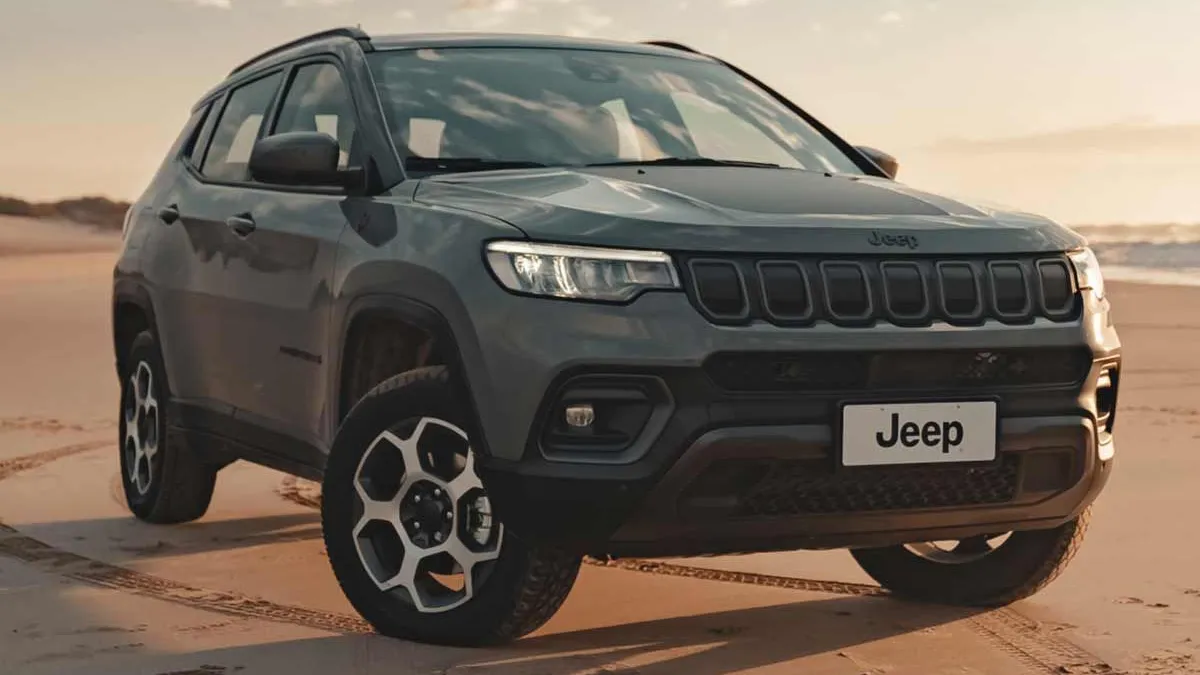
Jeep Compass Trailhawk — New MSRP: $32,395–$32,990; used Trailhawk listings often ~$20,000–$28,000 (condition/miles vary).
Towing: 2,000 lb; Ground clearance (Trailhawk): 8.6 in; Angles: 30.4° approach / 34.0° departure; Payload: roughly ~1,035–1,180 lb across Compass trims.
Which platform fits your use case?
Ford Bronco Sport — best trail tech for sand & ruts
Key strengths: Twin-clutch rear drive unit with a lock function (Badlands/Sasquatch), selectable G.O.A.T. modes, and broad aftermarket (spacers, struts, plates). The new Sasquatch package elevates hardware further with upgraded suspension and aggressive A/T tires, useful even if you don’t buy it, because it signals growing parts support. Max tow hits 2,700 lb on the 2.0L trims for lightweight campers.
Heads-up: Some 2021–2023 units had a 12-V battery recall; verify campaign status on used buys.
Subaru Outback Wilderness — best payload/space balance for soft-roading & long trips
From the factory, Wilderness gives you 9.5 inches of clearance, improved approach/departure/breakover angles, factory underbody protection, and 3,500-lb tow rating with the 2.4T. The long wheelbase and wagon body deliver excellent cargo volume for family camping with a low center of gravity for stability.
Jeep Compass Trailhawk — best angles & trail-armor value
Trailhawk brings 30.4° approach / 34° departure with standard Falken Wildpeak A/Ts, low-range mode, and factory skid protection points. Payload edge vs. rivals helps with water, tools, and overlanding bins. Max tow is 2,000 lb—fine for small teardrops and moto/ATV trailers.
What actually moves the needle under $5,000
For all three, you’ll get the biggest real-world gains from:
(1) Tires, (2) protection, (3) modest lift, (4) recovery & air, (5) cargo/rack organization. Skip heavy steel bumpers and big lifts at this budget; they eat payload, add wind drag, and often require costly alignment/camber fixes.
Smart parts menu (street pricing, 2025)
-
All-terrain tires (4–5 tires): $700–$1,200 installed (sizes below).
-
Skid plates (engine/trans/gas tank): $450–$1,000 (per axle/package). Subaru-specific packages for Outback/Wilderness typically ~$750–$900.
-
Lift/level kit (1–1.5 in): Bronco Sport spacer kits from ~$200; strut assemblies ~$800. Outback Wilderness 1–2″ kits ~$160–$800. Compass Trailhawk 1.5″ kits around ~$350–$400.
-
Compact compressor + deflators + gauge: $120–$250.
-
Traction boards + soft-shackle + kinetic rope: $180–$400.
-
Crossbars/flat rack + tie-downs: $300–$900.
-
12V power box or small power station (optional): $250–$700.
Tire sizes that fit (no drama)
-
Bronco Sport: With stock offset, 235/65R17 or 245/65R17 A/Ts are common choices; mild trimming may be required at 245 on some trims. Sasquatch brings aggressive rubber from the factory.
-
Outback Wilderness: Comes on 17-inch Yokohama Geolandar A/T; factory size 225/65R17 works great; many owners step to 235/65R17 with minimal fuss.
-
Compass Trailhawk: Clears ~28.3-inch tires stock; with 1.5″ lift you can size up modestly while keeping travel.
Three complete starter builds under $5,000
1) Bronco Sport “Trail-Ready Daily” — $4,350–$4,900
Platform price: New MSRP from $31,695; used ~$20k–$33k.
Why this works: You leverage the twin-clutch rear diff (Badlands/Sasquatch) and keep the lift mild to protect CVs and alignment.
-
Tires: 4× All-Terrain in 235/65R17 installed — $850–$1,050
-
Lift: 1.5″ spacer kit — $200 (or lifted struts $800 if you want OE-style ride).
-
Armor: Front skid plate/bash protection — $400–$700 (Bronco Sport & aftermarket options).
-
Recovery/Air: Compressor, deflators, soft shackles, boards — $350–$550
-
Rack: Crossbars + tie-downs — $350–$700
Result: Noticeably better breakover/obstacle clearance, safer air-down performance on sand/rocks, and still quiet enough for long commutes. Towing capability remains 2,200–2,700 lb (check your trim). Payload is finite—pack light.
2) Outback Wilderness “Long-Range Weekender” — $4,600–$4,950
Platform price: New $39,960–$41,710; used ~$32k–$40k.
Why this works: You already start with 9.5 in clearance, factory underbody protection, and 3,500-lb towing. Focus your $ on durability and organization.
-
Tires: Keep the factory 225/65R17 A/Ts until they wear; if replacing, go 235/65R17 — $900–$1,100
-
Armor: Primitive Racing skid package (engine + trans; add fuel tank later) — ~$750–$900.
-
Lift (optional): 1.0–2.0 in kit (LP Aventure or ADF) — $160–$800 depending on style.
-
Recovery/Air: Compressor + boards + soft shackles — $350–$550
-
Rack & cargo: Crossbars/flat platform + bin system — $500–$900
Result: Superb stability, big cargo volume, and enough payload (~900 lb) for two people and gear. The 3,500-lb tow rating opens teardrops and small boats; respect tongue weight and keep your center of gravity low. Angles remain solid at 20.0°/23.6°/21.2°.
3) Compass Trailhawk “Rocky Two-Day” — $4,200–$4,800
Platform price: New $32,395–$32,990; used ~$20k–$28k.
Why this works: Best approach/departure numbers in this trio plus decent payload for its size.
-
Tires: All-Terrain replacements in stock diameter — $850–$1,050
-
Lift: Daystar 1.5″ Trailhawk kit — $350–$400.
-
Armor: Mopar front/underbody pieces or aftermarket steel skid — $250–$700.
-
Recovery/Air: Compressor + traction boards — $300–$500
-
Rack: Crossbars and tie-downs — $300–$700
Result: Maximizes those 30.4°/34° angles, adds just enough lift, and keeps mass low. Towing stays 2,000 lb, so think ultralight campers/moto trailers. Payload in the ~1,035–1,180-lb neighborhood is a plus for water/fuel reserves.
Comparison: what you gain per dollar
-
Best stock capability per dollar: Outback Wilderness (already lifted, armored, and 3,500-lb tow). Add plates + small lift and you’re done.
-
Best trail gadgetry under $5K add-ons: Bronco Sport (Badlands/Sasquatch) thanks to twin-clutch trickery and growing Sasquatch ecosystem.
-
Best geometry in tight terrain: Compass Trailhawk with 30.4°/34° angles; inexpensive lift closes the gap on clearance.
Build planner: budgets that actually fit $5,000
| Category | Bronco Sport | Outback Wilderness | Compass Trailhawk |
|---|---|---|---|
| Tires (A/T, installed) | $850–$1,050 | $900–$1,100 | $850–$1,050 |
| Skid plates (core set) | $400–$700 | $750–$900 | $250–$700 |
| Lift (1–1.5 in) | $200–$800 | $160–$800 | $350–$400 |
| Air + recovery | $350–$550 | $350–$550 | $300–$500 |
| Rack/crossbars | $350–$700 | $500–$900 | $300–$700 |
| Total | **$2,150–$4,,**900 | **$2,660–$4,,**950 | **$2,050–$4,,**350 |
Buyer notes for 2025
-
Pricing movement: The Bronco Sport saw 2025 MSRP adjustments across Mexico-built models due to tariffs; expect some spread between sticker and transaction price.
-
Used market reality: Average Bronco Sport used pricing hovered in the mid-$20Ks this year; Outback Wilderness and Compass Trailhawk show strong residuals with many $20–$30Ks examples. Always check service histories and recalls.
FAQ
Is a $5K parts budget enough to go overlanding?
Yes. On these platforms, tires + basic armor + air/recovery are the “big three.” Add a 1–2″ lift only if you need approach/rut clearance. The goal is traction, protection, and reliability, not rock-crawler looks.
Which one to choose for towing a small camper?
The Outback Wilderness with 3,500-lb rating gives the most margin. Bronco Sport can tow 2,200–2,700 lb by trim; Compass Trailhawk is 2,000 lb. Confirm tongue weight and payload before loading.
What’s the safest first mod?
All-terrain tires. They transform grip and puncture resistance with minimal MPG/noise penalty compared with mud-terrains.
Do I need a lift to run A/Ts?
No. All three accept A/Ts in stock sizes. Mild upsizing is possible; verify clearance at full lock and compression.
Editor’s picks (by use case)
-
Daily driver + weekend trails: Bronco Sport with 235/65R17 A/Ts, 1.5″ spacer, front skid, compact rack.
-
Family camping + light towing: Outback Wilderness with skid package, crossbars/flat rack, compressor/boards.
-
Tight trails + rocky climbs: Compass Trailhawk with 1.5″ lift, A/Ts, skid upgrades, compact recovery kit.
The verdict
For a starter overland build on a $5,000 parts budget, the Outback Wilderness is the most turn-key for long trips, the Bronco Sport is the tech-savvy trail runner with a thriving parts scene, and the Compass Trailhawk maximizes angles and value. Pick the platform that matches your terrain and payload needs, then spend surgically on tires, armor, and air—the three most impactful upgrades in budget overlanding.