October 24, 2025
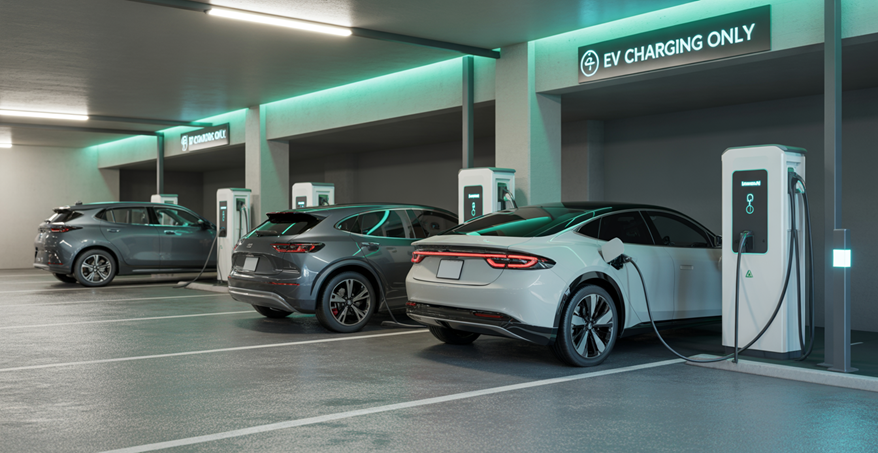
Thinking about charging an EV at a condo or apartment but worried about approvals, wiring, and costs? Good news. With a clear plan and the right language, most renters, condo owners, HOAs, and property managers can land a practical charging setup without drama.
This guide breaks down your options, how to pitch them, what they typically cost in the USA, and the key rights and responsibilities to know.
The quick overview: three winning paths
-
Use a standard outlet near your parking spot
Entry level, low cost, slower charging. Great if you drive modest miles daily. -
Install a Level 2 wallbox on a dedicated 240 V circuit
The sweet spot for most drivers. Faster, smarter, and still affordable when installation is straightforward. -
Adopt shared community chargers
Best when parking is unassigned or several residents want charging. Billing and access can be automated.
How to get approvals from HOA or landlord
HOAs, landlords, and property managers care about safety, appearance, liability, and billing. Walk in with answers, not just questions.
-
Pick a specific parking space that is assigned or can be formally reserved. Ambiguity is the enemy of approval.
-
Map the electrical path from the nearest panel to your space. Note distance, conduit route, and whether surface mount or trenching is needed.
-
Provide a simple load assessment from a licensed electrician. If the building panel is tight, ask about load management or a dedicated meter.
-
Show your wallbox install plan with photos or a one-page sketch. Include breaker size, GFCI requirements, and mounting details.
-
Address aesthetics and safety using tidy conduit, protective bollards where cars could hit equipment, and locked or RFID access if needed.
-
Explain billing so the property never pays for your energy. Options include a submeter, networked smart charger, or a simple outlet on your own meter.
-
Offer proof of insurance and maintenance for your equipment. Clarify removal and repair obligations if you move out.
-
Get written approvals that mention ownership, access, responsibility for damages, and how the installation will be removed or transferred.
Installation options, charging speeds, and typical costs
Option 1: Standard 120 V outlet in your spot
-
What it is: Level 1 charging using a regular household receptacle, ideally a new, dedicated GFCI outlet on a 15 or 20 amp circuit.
-
Speed: About 3 to 5 miles of range per hour. Overnight can add 30 to 50 miles, which is plenty for many commuters.
-
Typical costs:
-
New circuit or upgraded outlet: 150 to 600 dollars in simple scenarios
-
Longer conduit runs or panel work: 500 to 1,500 dollars
-
-
Best for: Short daily drives, predictable overnight parking, minimal budget.
Option 2: Level 2 wallbox install on a 240 V circuit
-
What it is: A dedicated 240 V circuit with a hardwired wallbox or a NEMA 14-50 or 6-50 receptacle feeding a portable Level 2 unit.
-
Speed: Commonly 25 to 40 miles of range per hour depending on amperage and vehicle.
-
Hardware: Many wallboxes offer Wi-Fi, load sharing, and access control for billing. Hardwired is often cleaner for HOAs.
-
Typical costs:
-
Wallbox hardware: 400 to 900 dollars
-
Electrician labor for a short, simple run: 700 to 2,500 dollars
-
Panel upgrade, long conduit, or trenching: 1,000 to 5,000 dollars or more
-
-
Best for: Drivers who want reliable overnight refills, faster speeds, and smart features that simplify approvals.
Option 3: Shared or community chargers
-
What it is: One or more networked Level 2 stations in common areas with RFID or app access. Costs and usage can be tracked per user.
-
Speed: Similar to Level 2 home units.
-
Typical costs:
-
Networked commercial station plus installation: 4,000 to 12,000 dollars per port depending on distance, panel capacity, civil work, and software.
-
-
Best for: Buildings with unassigned parking or multiple EV drivers. Pairs well with resident reimbursement or monthly passes.
Who pays and how to handle billing
-
Direct to your unit’s meter: Cleanest for condos or some garden apartments. Energy usage appears on your electric bill.
-
Submeter at the charger: Track kWh and reimburse the landlord or HOA monthly.
-
Networked billing: The wallbox or shared station bills your card per kWh or per hour. Property manager gets reports and reimbursement automatically.
-
Flat fee models: For small buildings, a simple monthly fee can work. Include a fair-use clause.
Rights and responsibilities in a nutshell
-
Rights: Several states have “right to charge” style laws that limit unreasonable denial of EV charging in condos or rentals. The intent is to allow residents to install at their expense while protecting the property. Laws vary, so confirm your state and city rules before you submit a request.
-
Responsibilities: Expect to pay for your equipment, installation, and energy. You may need to carry liability insurance, maintain the wallbox, and restore the property if you move. Your installation must comply with electrical code and any HOA design standards.
FAQs
How long does an installation take once approved?
Simple installs often take a few hours. More complex runs or panel work can take a day or two plus permit inspections.
What if my building’s electrical panel is full?
Ask about load management, a panel upgrade, or using a smaller amperage wallbox. Smart chargers can dynamically share load across multiple units.
Can the property add a markup to electricity?
Yes, many buildings add a reasonable fee to cover network software, maintenance, or administration. Keep it transparent and consistent.
What if I park outdoors?
Choose outdoor rated equipment, add protective bollards if needed, and ensure the circuit has GFCI protection as required by code.
Bottom line: Apartment EV charging solutions are absolutely doable when you present a tidy plan that covers wallbox installation, outlet options, approvals, costs, and rights. Lead with safety, billing clarity, and a future friendly layout. Your HOA, landlord, or property manager will appreciate the preparation and you will enjoy a smooth plug-and-charge routine at home.